
AI & Machine Learning Website Agency
Your model is genuinely better. Your site reads like everyone.
We design and build websites for AI and machine learning companies. Gradient background, a floating orb, the word intelligence. The category converged on one look and one vocabulary, which means the buyer cannot tell you apart from the eleven other tabs they have open.
What an AI & machine learning website agency does
An AI & machine learning website agency positions and explains AI, machine learning and data infrastructure companies so technical and financial buyers can judge the purchase rather than the demonstration. Everything Deep Tech builds architecture, custom 3D, spec systems, design, build, SEO and AEO.
| Best for | AI, machine learning and data infrastructure companies. |
|---|---|
| What goes wrong | A gradient and an orb is not a product story. |
| What you get | Architecture, custom 3D, spec systems, design, build, SEO and AEO. What an engineer needs first, what a buyer needs, and where documentation sits in the journey. |
| Timeline | 9–16 weeks from kickoff to live. Fixed scope, fixed timeline, one price. |
| Disciplines in one room | strategy, copy, design, 3D, build and collateral. |
| Category | The benchmark table with its conditions attached, designed to be scanned rather than screenshotted from a paper. |
A gradient and an orb is not a product story.
Five reasons AI and machine learning websites underperform, even when the engineering behind them is excellent.
- →The visual language is identical. Dark gradient, glowing orb, the word intelligence. Swap the logo and nobody notices, in the one category where being interchangeable is fatal.
- →The evals have no conditions. A benchmark number without the hardware, the context window and the date is treated as marketing by everyone qualified to buy.
- →The docs are an afterthought. For a technical buyer the documentation is the product demo. Most sites treat it as a link in the footer.
- →Pages are too heavy. Autoplaying hero video plus render galleries is a slow page. Your buyer often opens it on conference wifi.
- →Nothing is quotable. Answer engines do the first screening, and this category gets described wrongly more than any other. Unstructured pages get paraphrased into the wrong capability.
Designed and built by the same people.
Architecture
What an engineer needs first, what a buyer needs, and where documentation sits in the journey.
Custom 3D
Where the product has a physical or architectural surface worth showing, modelled rather than illustrated.
Spec systems
Evaluation tables, latency numbers and pricing designed to be read on a phone with conditions intact.
Design
A system applied page by page, not one template stretched across the site.
Build
Webflow or static, built in-house, tuned for Core Web Vitals on a poor connection.
SEO and AEO
Structured, fast and quotable, so search engines rank it and answer engines describe your model correctly.
Precision is the point and it converts.
Weeks from kickoff to live. Fixed scope, fixed timeline, one price.
Stock gradient orbs. If there is a visual on the page, it explains something.
Disciplines in one room: strategy, copy, design, 3D, build and collateral.
A fast, well-built site cannot rescue unclear positioning. If the category and the moat are not settled, start there.
AI and machine learning website questions, from founders.
Can you write documentation as well as marketing pages?
Yes, and for a technical buyer the documentation usually matters more. It is where the evaluation actually happens.
How do you present benchmarks without overclaiming?
Conditions attached, date stamped, and where you lose stated plainly. A page that admits a weakness is believed on its strengths.
Webflow or a static build?
Either. Webflow when the team needs to edit without us, static when performance and control matter more. We are Webflow Partners, and both routes are built in-house by the people who designed the page.
How long does it take?
Nine to sixteen weeks for design, 3D and build. Fixed scope, fixed timeline, one price.
Do you sign NDAs before seeing the technology?
Yes, and it is the normal starting point. Most of what makes a deep tech company defensible is unpublished.
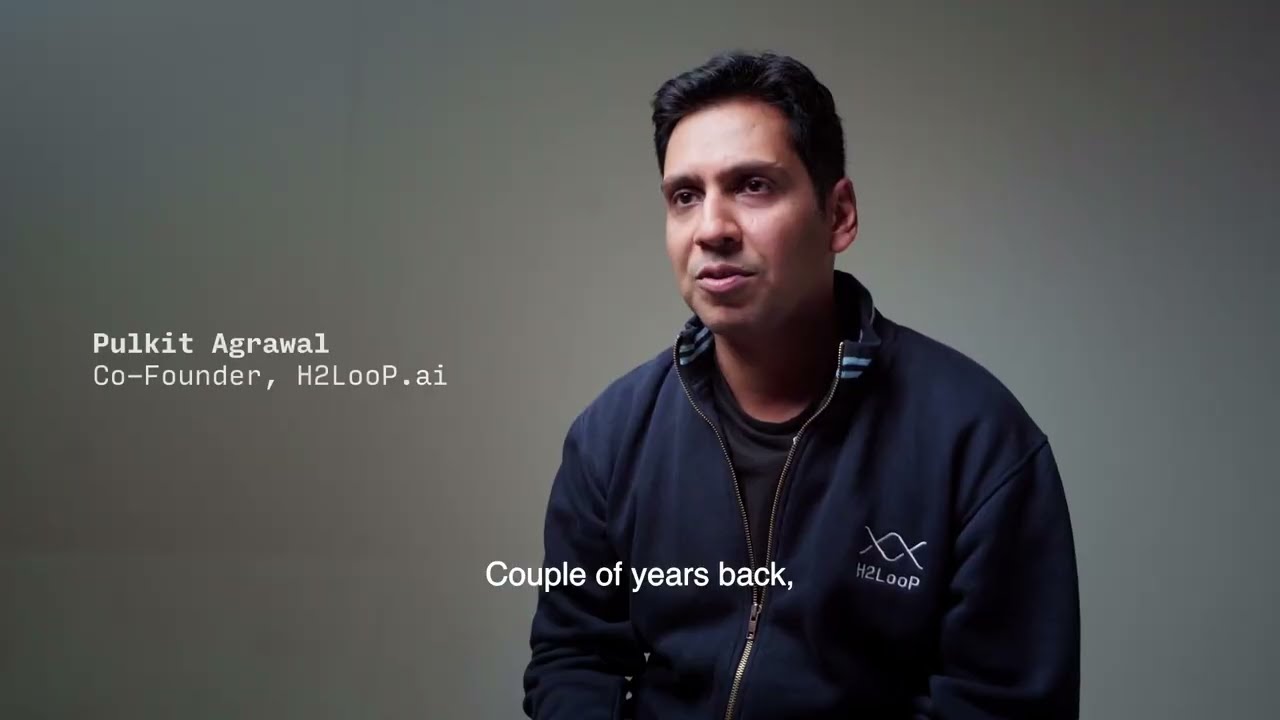
The H2LooP engagement is filmed and explained on its own page, motion work included.
Send us the eval table and your documentation.
Thirty minutes, no deck. We will tell you what your site is hiding, what it is loading badly, and what a specialist gives up on before they reach it.
Book a 30-minute audit →