
Ten engineers. Ten critical roles.
Everything Deep Tech is an engineer-led design studio: 19 people, 10 of them engineers by degree, working only on deep tech. That is, plainly, not common in a design studio. It is also the entire reason the brief does not get corrupted on the first call.
In short
Answer summary- Who works here?
- Strategists, designers and engineers by degree, running strategy, 3D, delivery and the build.
- Why does that matter?
- An engineering degree changes the brief: the person writing your architecture story has shipped hardware.
- Who will you actually meet?
- Everyone who touches the work. No account layer, no offshore second team.
Why an engineering degree changes the brief.
Most studios put an account manager between you and the person doing the work, and the technical detail degrades at every hop. Here the person reading your spec sheet is the person who has built to one.
- Mejo Kuriachan
 Mechanical engineeringBrand strategyReads the spec sheet and knows what it cost to ship the variant table, so the positioning is argued from the engineering out rather than the market in.
 - Saurabh Chakradhari
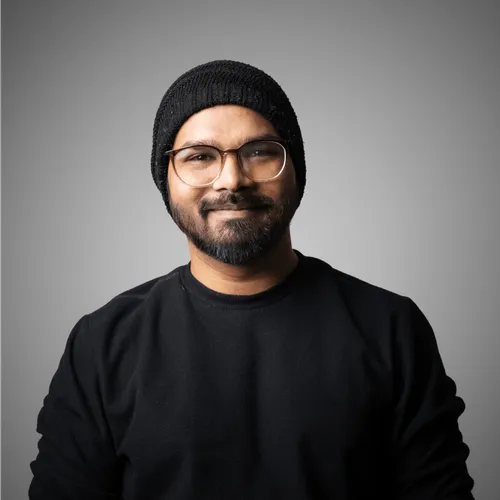 Aerospace engineeringHead of webLeads scroll-driven, custom-code-heavy builds. Constraint discipline from a field where the build has to survive conditions nobody gets to retry.
 - Vignesh
 Mechanical engineering3D leadModels a reactor twin or a battery pack from the spec, not from a reference photo, so the render is right about what the object does, not just how it looks.
 - Akshay A D
 Mechanical engineeringDeliveryRuns engagements with a fabrication tolerance for precision: constraints, dependencies and sequence, QA’d against your tender or funding date.
 - Sreejith K
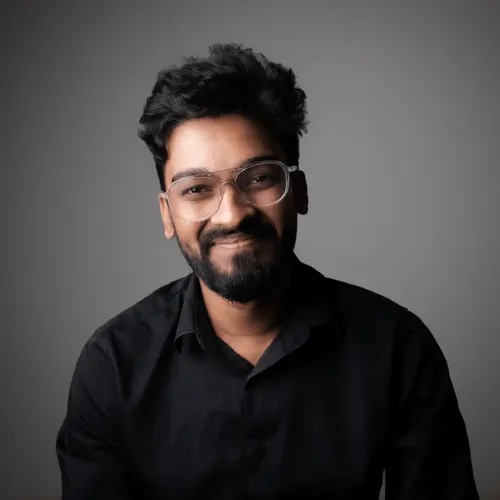 Computer science engineeringMotion, 2D and 3DAnimates architecture, data flow and protocol because he can read them. Half of deep tech motion is diagrams of systems, and a motion designer who understands the system draws a different diagram.
 - Siva S
 Electronics and communications engineeringBuild and 3D on the pageBuilds the pages and the 3D running inside them, from a background in VR, WebGL and a space-operations platform. Whether a scroll sequence survives a mid-range laptop is decided here, not in the design file.
 - Rajashri Brahma
 Computer science engineeringFrontend and R&DDebugs the scroll sequence and works out why the 3D stutters on a mid-range laptop, which is a profiling and memory problem before it is a design one. A computer science degree is what makes that a measurement rather than a guess.
 - Goutham Shravan
 Bachelor of TechnologyWebflow build and researchBuilds in Webflow and does the research that goes into a document before anyone designs it. An engineering degree is what makes a research document argue from the evidence rather than around it.
 - Jiyash A K
 Master of Computer ApplicationsBuild and technical SEOBuilds the site and then makes sure it is found: schema, Core Web Vitals, crawl and indexation. In a category where answer engines quote whoever is legible, that is not a post-launch task.
 - Ahamed Sabahir
 Bachelor of TechnologyBuild and maintenanceBuilds the site and keeps it alive after launch, which is where most B2B sites quietly rot. An engineering degree plus formal UX training is the combination that produces a CMS a lean marketing team can actually run.
Everyone who touches the work.
No account layer, no offshore second team. The people below are the people on your calls.
Mejo Kuriachan
EngineerMechanical engineer by degree, brand strategist by trade. Reads your spec sheet and understands what it costs you to ship the variant table.
LinkedIn →
A decade of brand work across deep-tech, hardware and frontier categories. Runs the craft half of the room, the part that makes a brand unmistakable at a glance.
LinkedIn →
Saurabh Chakradhari
EngineerLeads the Webflow team shipping scroll-driven, GSAP-animated, custom-code-heavy builds. Tolerance for complexity, respect for what the build has to survive.
LinkedIn →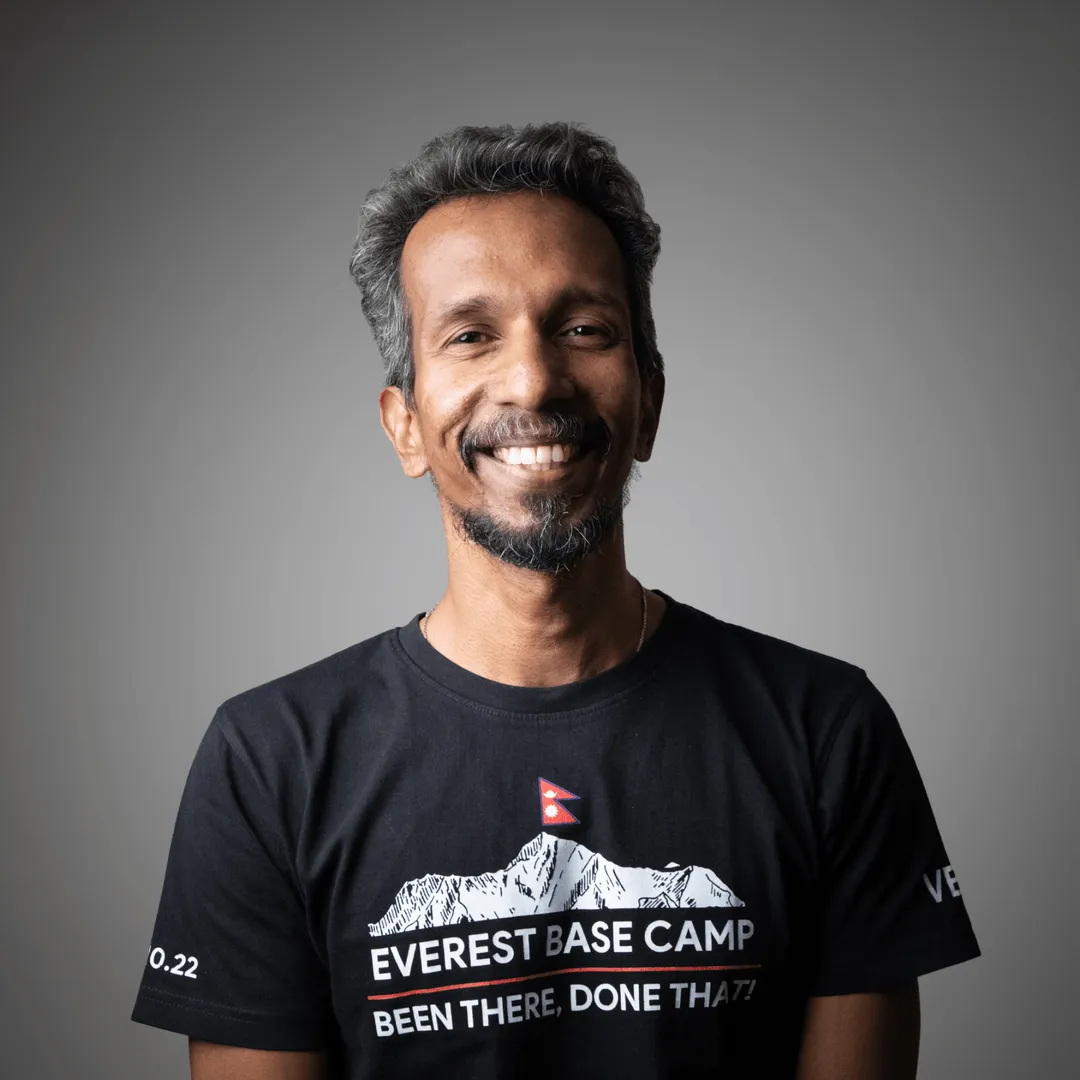
UX, brand and category strategy braided together. Years embedded with engineering teams across multiple categories.
LinkedIn →
Vignesh
EngineerProduces the product renders and hero animations: counter-drone hardware, battery packs, reactor twins, made by someone who knows what the object is supposed to do.
LinkedIn →
Writes the copy: spec sheets turned into buyer journeys, founder voice, the line an investor repeats back to you. Sharp, sometimes poetic, never padded.
LinkedIn →
Led design on Bharat Atomics, Scimplify and Turno, and worked on PolyEnergetics. Fluent in spec-sheet vocabulary from years sitting next to the engineers writing them. Carries brand systems from identity through to the built page.
LinkedIn →
Akshay A D
EngineerRuns the engagement: dependencies, sequence, the tender or funding date everything is QA’d against. A fabrication background’s tolerance for precision.
LinkedIn →
A physics degree behind the design work. On Kandou AI, LightMetrics, NXPEC and Transitry, translating interconnect stacks, in-cab video AI, energy infrastructure and carbon measurement workflows into pages a non-engineer can move through, which is easier when the underlying physics is not new to you.
LinkedIn →
On LightMetrics. Works across design and content strategy, so the layout and the argument are built at the same time.
LinkedIn →
Rajashri Brahma
EngineerOn Armory, Kandou AI and Turno. The one who debugs the scroll sequence at 2am and works out why the 3D stutters on a mid-range laptop.
LinkedIn →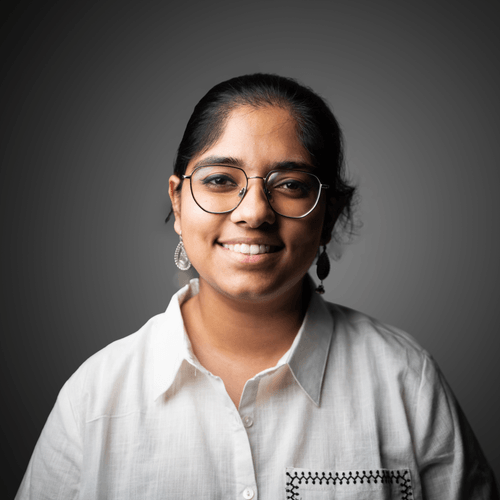
Storytelling on Armory. Concepts, illustration and stop-motion. The reason a deep tech brand can have a hand-made edge instead of defaulting to another gradient and a wireframe globe.
LinkedIn →
Runs operations across engagements: capacity, sequence and the dependencies nobody else wants to own. The reason a fixed timeline stays fixed when three projects need the same week.
LinkedIn →
Jiyash A K
EngineerBuilds the site and then makes sure it is found: schema, Core Web Vitals, crawl and indexation. In a category where buyers search in specialist vocabulary and answer engines quote whoever is legible, that is not a post-launch task.
Profile →
Sreejith K
EngineerWorks in both 2D and 3D, which on a deep tech brief is the difference between explaining a mechanism and explaining an argument. Moves between the two inside one project rather than handing it to a second team.
LinkedIn →
Siva S
EngineerBuilds the pages, including the ones with a 3D sequence bolted through them. The part of a deep tech site that has to survive a mid-range laptop is decided here, not in the design file.
LinkedIn →
Ahamed Sabahir
EngineerBuilds and maintains the sites after launch, which is where most B2B websites quietly rot. A CMS a lean marketing team can actually run is a build decision made early, not a handover document written late.
LinkedIn →
Goutham Shravan
EngineerBuilds in Webflow, and does the research that goes into a document before anyone designs it. Built the AI report for Z47, which is the kind of deliverable that has to say something rather than look like it does.
LinkedIn →
Leads brand identity, and specialises in cybersecurity brand and website work, where the page has to establish that the company can be trusted with the problem before it explains how it solves it.
LinkedIn →The best technology in the world should not be stopped by translation.
Hard science is not an excuse for a boring brand.
It is the reason to build a memorable one. The technology is the hardest part and it is already done. The translation is the part still outstanding.
We do not take credit for your round.
A company we work with raises, and the engineering is why. Design removes the reasons a good technology gets misread. It does not invent the technology.
No glossary call on day one.
State-of-health, digital twin, directional jamming, second-life decisioning. Day-one vocabulary, so the first meeting is about your problem rather than about teaching us the category.
Talk to the people who will do the work.
Thirty minutes, no deck, no account manager. Bring the spec sheet.