
Film production for deep tech companies
Why the SaaS video playbook breaks on hard technology, which format fits which mechanism, and how to tell a production vendor from a partner.

- Standard SaaS videos rely on screen recordings and UI walkthroughs. Deep tech companies must explain mechanisms that screen recordings cannot show while maintaining scientific accuracy.
- Product demos and technical explainers justify their cost by matching the visual format and level of detail to a specific buyer's decision.
- Before a product ships, founder videos can establish credibility by showing command of the science and commercialisation plan. Investor videos can connect the technical moat to concrete milestones.
- A production partner must learn the technical domain quickly. That knowledge helps the partner represent the science accurately and avoid a generic B2B story.
Deep tech film succeeds when it explains an unseen mechanism accurately, adapts the evidence to a specific audience, and is produced by a team that can understand the technical domain.
Why the standard B2B video playbook breaks for deep tech
The standard B2B video playbook breaks for deep tech because screen recordings cannot reveal many physical, chemical, or biological mechanisms. SaaS production, by contrast, can use a visible interface and sample data to create a storyboard and demo. Published SaaS video budgets reflect this method: a screen-recorded walkthrough may cost $1,000 to $3,000, while added animation and live footage raise the price.
SaaS production plans also treat the interface as the main visual asset. When the software changes, the demo becomes outdated, so producers divide videos into replaceable sections. When different buyers need different messages, producers can reuse the dashboard and change the narration around it. Finance sees the economic case, while IT sees security controls.
Deep tech products rarely provide an equivalent asset. A reactor may hide its most important activity inside a sealed chamber. A molecule cannot perform a recognizable action on camera. Even a visible robotic arm reveals little about the underlying engineering that gives it an advantage. Screen recording cannot explain those mechanisms, and repurposing the same footage for another buyer often changes very little.
The familiar SaaS demo sequence also depends on an outcome that viewers can see quickly. An on-screen walkthrough can demonstrate how software replaces a familiar workaround. Deep tech companies may need years of validation, physical testing, or regulatory review before they can show a comparable before and after result.
A deep tech brief therefore starts with the mechanism that viewers must understand and the evidence they will trust. Technical buyers may look for test conditions and engineering constraints. Investors may look for defensible intellectual property and credible development milestones. Video producers must choose the visual medium based on what it can reveal accurately. A polished treatment cannot compensate for an incorrect mechanism or an unsupported claim.
Where does video actually help a deep tech company?
Deep tech video has to answer a different question for each audience watching it. Technical buyers need evidence that the mechanism works. Investors need a credible account of the moat and the milestones. Non-technical viewers need enough context to understand the product's value without a science lesson. A single generic awareness video cannot carry all three.
Product demos that make invisible or physical mechanisms clear
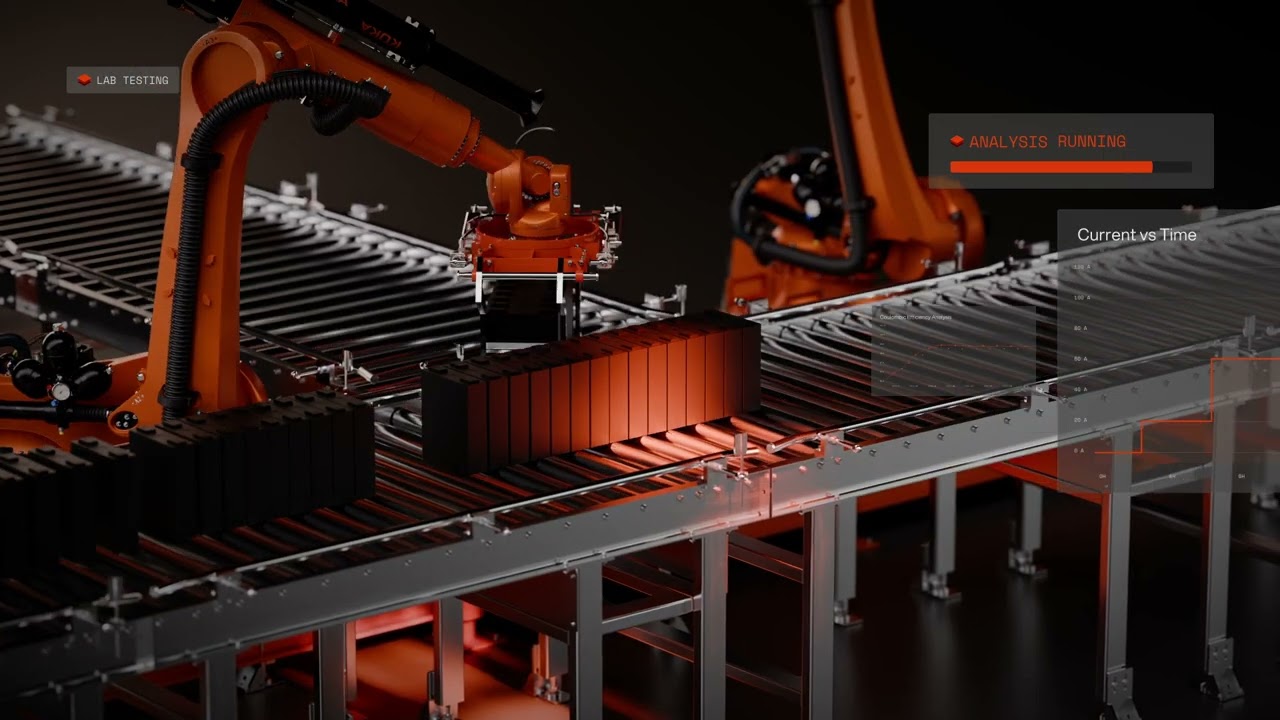
The team creating a deep tech product demo should choose its visual format according to the mechanism the audience needs to understand. A physical product may need 3D animation when viewers must see internal structure or movement that a camera cannot capture. It adds little when spatial detail does not affect the explanation.
Chemical and biological processes require a different judgment. Animation can reveal interactions that happen at microscopic scales, while diagrams can explain a sequence without implying a level of realism the underlying evidence cannot support. For a purely computational product, 2D motion graphics often explain data flow and decision logic more clearly. Mixed media works when live footage must establish the real operating environment and animated overlays must reveal what the product detects or changes.
| Mechanism type | Best format | Why |
|---|---|---|
| Physical structure or movement | 3D animation | Shows internal parts and motion a camera cannot capture |
| Chemical or biological process | Animation or diagram | Reveals microscopic interaction without overstating visual realism |
| Computational logic | 2D motion graphics | Explains data flow and decision logic without unnecessary depth |
| Product in a real environment | Mixed media | Live footage grounds the setting, overlays reveal what the product detects |
Every displayed detail must remain technically accurate, regardless of the chosen format. Our Cloudphysician product demo showed an AI copilot processing patient video and clinical data in a high-acuity care setting. If the patient's heart-rate monitor displayed 120, the video had to show that exact reading. Scenes were reshot and parts of the script rewritten during filming when clinical details needed correction.
Cloudphysician has said it closed its first US client after the first showing of that film, and the engagement later grew into website and marketing work. One result does not establish causation. It does put a technically reviewed demo at a decisive moment.
A technical audience treats an incorrect reading as a factual error, not a visual approximation. Product specialists should review the demo before delivery and verify the depicted data and sequence. Visual clarity helps viewers understand the mechanism, but accuracy gives them a reason to trust it.
Technical explainers that simplify without dumbing down
Good technical explainers simplify by controlling scope for a named audience. An investor needs a quick account of the commercial case and technical moat. A technical buyer needs enough detail to judge how the platform works and whether its claims hold up. A viewer evaluating a use case needs to see how the technology performs in a specific industry or operating environment.
One anonymised project showed how shorter, audience-specific videos can replace a dense film. A technically strong 17-minute product film was reworked into five standalone videos totalling roughly nine minutes. A short pitch served early investor conversations, while two platform explainers provided deeper technical education. Two other videos connected the technology to specific industry applications.
Each script preserved the underlying science while changing the sequence and level of explanation. The investor script established significance before explaining mechanics. The buyer scripts spent more time on capabilities and defensibility, while the use-case scripts made abstract claims concrete through specific applications.
The process asks who will watch each asset before discussing animation style. Audience-specific scripting prevents an information dump without removing the evidence that technical buyers need.
Founder and vision videos when the company is pre-revenue
A pre-revenue deep tech company often has little customer traction or finished product footage to show. The founder and technical team must therefore carry much of the evidence. Their command of the science and commercialisation plan gives investors a basis for judging whether the venture can move beyond the lab.
Investors assess more than technical novelty. Early hard-tech investors examine whether the founder has a strong record and a defensible plan for protecting and commercialising the technology. A founder video should connect the technology's value with the company's ability to commercialise it.
Specific production choices can support that argument. A founder can explain one technical principle on camera while diagrams clarify the mechanism and laboratory footage shows the work behind it. Other specialists can address an area such as manufacturing or market access when it requires distinct expertise.
Vague claims and decorative laboratory footage weaken credibility because technical investors can compare the spoken pitch with the visual evidence. The founder gains credibility by using precise language and concrete development milestones without presenting unfinished research as a finished product.
Fundraising and investor videos that explain the case quickly
An investor video has to present a technical venture concisely without flattening its substance. Investors need to understand the technology's advantage and the company's plan to turn it into a viable product. A dense technical lecture loses attention, while a polished summary without evidence weakens credibility.
A useful comparison is the first episode of a series: the story should earn a second conversation rather than answer every possible question. Concrete milestones showing what the company expects to achieve over the coming months connect the technical moat to an execution plan.
A set of short, audience-specific videos lets each investor choose how much detail to review. A first-time viewer can start with the pitch, while a technically fluent investor can continue into the mechanism or use case. The company can also reuse the videos on its website and in later investor or sales meetings. Choosing a partner that can preserve the technical context across those assets is therefore part of the strategy, not just a production decision.
How do you evaluate a video partner for deep tech work?
A deep tech video partner should demonstrate technical understanding before proposing a creative treatment. During the pitch call, ask how the agency would learn your product and which specialists would join the discovery sessions. A credible answer should explain who will interview technical leaders and review existing documentation. The agency should also identify who will check scripts and visuals for accuracy. Look for an agency that can explain the product in plain language before discussing visual styles.
The agency should choose production techniques after developing the story. Ask what would make 3D animation necessary for your product and when 2D motion design would communicate the mechanism more clearly. Products with internal hardware or important spatial movement may justify 3D. Abstract processes can often use 2D diagrams or visual metaphors without losing accuracy. The agency should estimate production effort after the script and storyboard establish what viewers need to see.
A useful partner should plan reusable, audience-specific videos rather than one long film. Ask how the proposed videos could support the website and later fundraising or sales conversations without repeating material.
Before choosing a partner, ask who will perform the discovery work and whether those people will remain involved through production. A production vendor may execute an approved script well. A deeper partner helps define what each audience needs and checks technical claims throughout production. The same people should carry that knowledge into future videos.

What does this look like in practice?
Our explainer video work keeps strategy and production in the same room to preserve technical context. Strategists establish the audience and the technical claim before the motion team chooses the visual format. Because both work in house, the motion team can resolve questions against the original technical briefing instead of a chain of external handoffs.
Sevenloop shows the value of keeping that context inside the team. Existing knowledge of the manufacturing market and of the founder's goals went into the film, which is what kept it from becoming a generic industrial treatment.
Deep tech video works best when technical understanding, audience strategy and production remain connected from discovery through delivery. Companies with a finished script may prefer an execution-focused studio. If your team needs both the strategy and the production, the conversation starts with the audience, the claims that require validation, and the visual medium that can explain the mechanism accurately.
How long does a partner need to understand a technical product?
Discovery depends on the product's complexity, the quality of available documentation, and access to subject experts. It includes reviewing technical materials and interviewing the people who built the thing. Providing clear documentation and access to engineers shortens discovery while preserving accuracy.
How much does deep tech video cost against a standard B2B explainer?
More, because it requires additional discovery, expert review and custom visuals. The effort is estimated after the script and storyboard identify the visual techniques the story actually needs. Estimating story-first avoids paying for animation the explanation does not require.
Does a deep tech explainer need 3D animation?
Only when physical depth, structure and movement have to appear accurately on screen. When depth does not affect the explanation, 2D motion design is clearer and cheaper. Choosing the simplest accurate format is the discipline, not defaulting to the most impressive one.
Written by Mejo Kuriachan. More in the blog, the glossary and the FAQ.