
Strategic branding for energy infrastructure companies (delivery first)
Energy infrastructure brand strategy for buyers weighing delivery risk: lead time stated plainly, installed base on the page, three readers served.

- A datasheet proves the equipment meets a rating. The objection most buyers are weighing is delivery risk, and a datasheet cannot answer it.
- Meeting IEC and ANSI standards is the entry requirement. Every credible supplier clears that bar, so nobody wins a tender on the datasheet alone.
- Three readers decide from one brand: the engineer sizing the equipment, procurement scheduling it, and the financier who needs the supplier to exist in ten years.
- Proof in this category is units in service and years running. Most of that evidence sits in a PDF behind a form, where no buyer reads it.
Strategic branding for an energy infrastructure company is the work of deciding what the brand claims once the datasheet has already confirmed the rating. A datasheet proves the equipment. It does not prove the schedule, and the schedule is usually the actual question on the buyer's mind, whether the buyer is a utility, an EPC contractor or a developer.
Why does a datasheet fail to establish the delivery schedule?
A datasheet fails on schedule because a rating is a technical fact and a delivery date is a commercial promise. The datasheet can only make the first kind of claim.
The gap has widened. The IEA reported in February 2025 that procurement now takes up to four years for large power transformers, twice as long as in 2021. The same release puts the rise in power transformer prices at around 75%.
Utilities, EPC contractors and developers have usually already been quoted a long lead time by a larger supplier. What they need next is confidence that a smaller supplier can hold a date. A perfect spec sheet attached to an uncertain delivery date solves the wrong problem.
Why doesn't meeting the standard win the order?
Meeting the standard does not win the order because every credible supplier already meets it. For power transformers, that means IEC 60076-1 in most markets and the ANSI-approved IEEE C57.12.00 in North America.
Type test reports and factory acceptance results come with that territory. Buyers check for them before they read a sentence of copy. Having them gets a supplier onto the list, and the argument starts after that.
Why does a smaller supplier compete against a feeling instead of a spec?
A smaller supplier competes against the sense that nobody was ever fired for buying the incumbent. A handful of very large manufacturers own the category's default trust. Branding cannot make a smaller company larger, and it should not try.
It can make the smaller company's real advantage the first fact a buyer understands. That advantage is usually one of these:
- Schedule control, with slots a buyer can book.
- A rating class the incumbents deprioritise.
- Engineering support that stays with the project after delivery.
The competition is wider than the incumbent. An integrator may bundle the equipment into a larger scope. And the buyer remembers a late delivery on a previous project, which behaves exactly like a competitor.
That memory is why capability claims land so weakly here. A buyer who has been burned on schedule is asking whether you tell the truth about dates. Engineering detail cannot answer that question.
Why is delivery risk the real objection nobody names out loud?
Delivery risk is the real objection because the buyer's project stalls when a unit arrives late, and most buyers have lived through exactly that. A brand that talks about quality and never about schedule answers a question nobody asked.
State lead time and slot availability directly, on the page. That is the conversation the buyer came to have. Silence on delivery reads as bad news, even when the real answer would have reassured them.

Who has to say yes: the engineer, procurement or the financier?
All three have to say yes, and each tests something different from the same pages:
- The engineer needs ratings, duty and compliance.
- Procurement needs lead time and commercial terms.
- The financier needs to believe the supplier will exist in ten years to honour a warranty or supply spares.
This equipment sits in service for decades. The IEA's 2023 grids report describes adding or refurbishing over 80 million kilometres of grids by 2040. Projects on that scale put a financier in the room.
Most energy infrastructure sites are written for the engineer alone. Serving three readers does not need three sites. It needs each page to decide who it speaks to, while the other two can still find what they need.
Why does proof here mean an installed base, not an adjective?
Proof here means an installed base because units in service are the one claim a buyer can verify. Utilities served, years running and failure records beat any description of engineering quality.
Those figures usually sit in a PDF behind a form. Move them onto the page where the buyer decides whether to enquire. A reference list of named utilities does more than a paragraph of adjectives.
In India, the evaluation also runs through planning rules the buyer already works to, such as the Central Electricity Authority's transmission planning criteria. A supplier who writes in those terms sounds like someone who has delivered before.
How does nuclear change the argument?
Nuclear raises every stake in this post, because the buyer is often a government programme and the regulator reads the brand too. India's Union Budget 2025-26 set up a Nuclear Energy Mission for small modular reactors, with an outlay of ₹20,000 crore. It targets at least five indigenously developed SMRs operating by 2033 and 100 GW of nuclear energy by 2047.
Safety claims in India answer to the Atomic Energy Regulatory Board, whose mission is to ensure nuclear energy "does not cause undue risk to the health of people and the environment." A nuclear brand that overstates anything will be read against that standard.
Two of our clients build reactors:
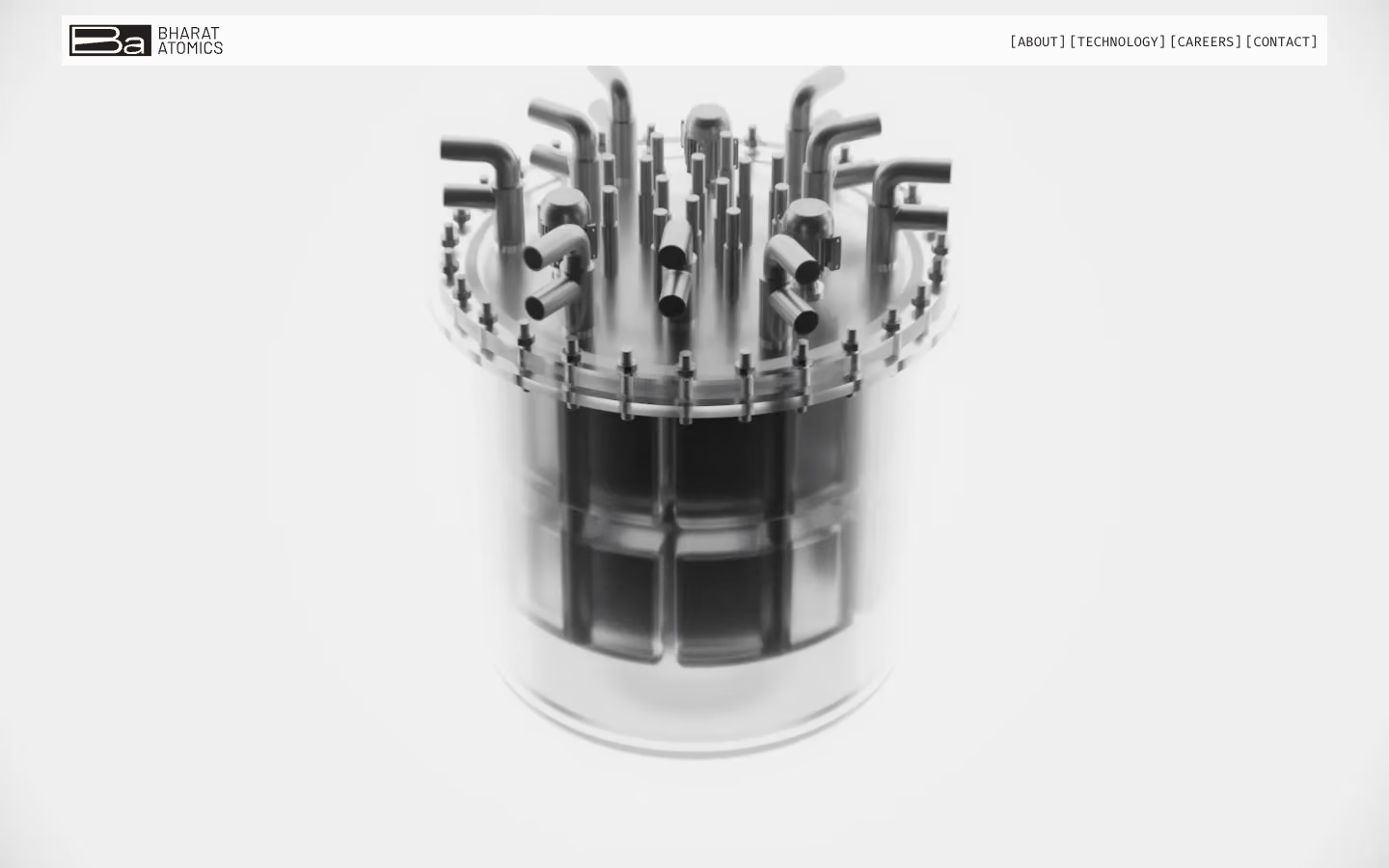
- Bharat Atomics is developing a sodium-cooled fast reactor that runs for twenty years on a single fuel load, can be factory-built, and targets 150 MWe of firm power. We did its branding, logo, brand narrative, website, pitch deck and 3D visualisation.
- PolyEnergetics works on reactor design, digital twins, simulation and operator training for a molten salt micro modular reactor.
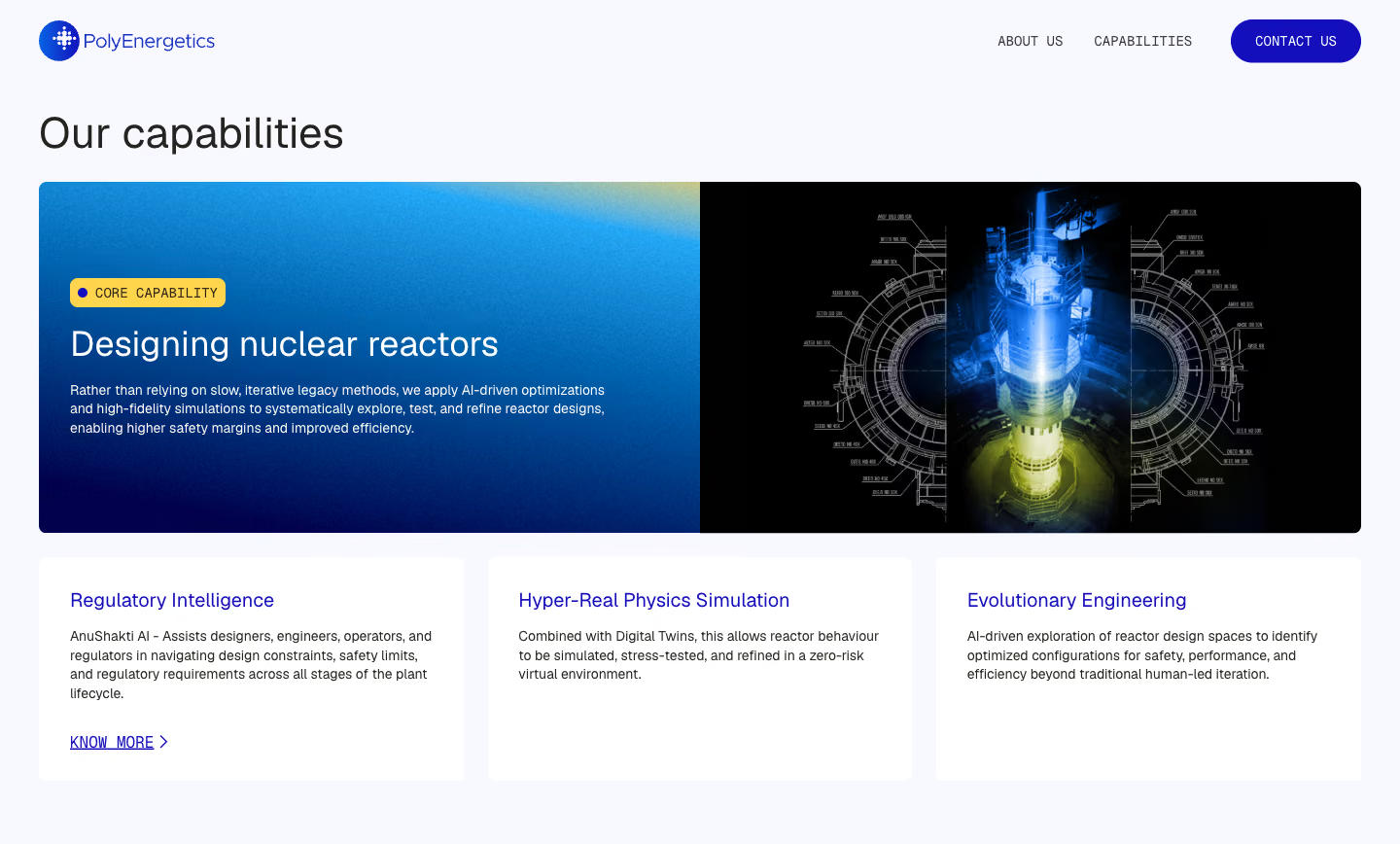
Pradeep, co-founder and CEO of PolyEnergetics, described the result: “Nuclear is the hardest category we could have asked someone to brand, and they made it read like a software platform without losing an ounce of gravity.” We cover the climate side of the same buyers in our cleantech branding guide.
What does naming need to survive across a product range?
Naming needs three layers: company, product range and rating class, with room for the next voltage class. A range named for today's highest rating becomes a limit the moment the company qualifies a higher one. Renaming a range mid-tender cycle costs more trust than most founders expect.
We plan that structure as part of naming.
The same discipline decides how the site is organised. Most energy infrastructure sites follow product families, because that is how the factory thinks. A buyer arrives with a rating and a delivery date. Order the site the way a project team works:
- Ratings.
- Certification.
- Lead time.
- Installed base.
What did the Ayr Energy engagement actually involve?
The Ayr Energy engagement covered identity, a full website, custom 3D, a brand film, an exhibition stand and ongoing video. Ayr supplies critical power grid equipment: power, medium voltage and special purpose transformers, and high voltage circuit breakers.

The 3D work mattered because a photograph of a transformer tells a project engineer almost nothing about fit. A model built from drawings can show exactly that. We explain the method in 3D industrial animation for deep tech companies.

The film and the stand carry the identity to the trade show floor and the boardroom, the two other places buyers meet a supplier. We have not published an outcome for this engagement. The case study shows the work itself.
What does an engagement deliver, and how long does it take?
An energy infrastructure brand engagement takes nine to sixteen weeks from kickoff to a finished brand system, at a fixed scope and one price. The price is quoted after a thirty-minute call, and the ranges are on our pricing page.
The work runs in this order:
- Category and positioning: manufacturer, integrator or supply partner.
- Naming, where the range needs it.
- Narrative and identity.
- Messaging for the engineer, procurement and the financier.
- A brand book that records all of it.
Where the company is raising, we build the pitch deck from the same narrative. The team is nineteen people, ten of them engineers by degree. We sign an NDA before reviewing equipment still in development, as described in branding under NDA.
When is this not a fit?
A single product photograph or a quick catalogue refresh is not a fit. A freelance designer will do that for less, because it needs no positioning decision and no naming system. If only the site needs rebuilding, our energy infrastructure website work is the narrower option, and our energy infrastructure branding page covers the full scope.
If the company does not know its own schedule risk, branding cannot manufacture that confidence. The honest fix is operational.
This suits a supplier that already knows its real advantage and wants it legible to three readers at once. It does not suit one that wants the brand to imply a delivery certainty operations cannot back up.
FAQ
We compete with far larger manufacturers. Can branding help?
It cannot make you larger, and it should not try. It can make the specific thing you do better, usually schedule control or a class the incumbents deprioritise, the first thing a buyer understands.
Is lead time really a brand problem?
Lead time is the purchase decision, so it is the positioning. If delivery certainty is your advantage and the page opens on quality, the advantage is invisible to the person choosing.
Which energy companies have you worked with?
Ayr Energy on power grid equipment, Bharat Atomics on a sodium-cooled fast reactor, PolyEnergetics on a molten salt micro modular reactor, and NXPEC Technologies on solid state transformers, where the branding, website and film are in progress.
Have you worked with nuclear companies?
Yes. Bharat Atomics, a sodium-cooled fast reactor company, and PolyEnergetics, a molten salt micro modular reactor company.
What is the status of the Ayr Energy engagement?
The scope covered identity, website, 3D, a brand film, an exhibition stand and ongoing video, for a company supplying transformers and high voltage circuit breakers. No outcome has been published for that engagement.
Does branding replace a type test report?
No. A type test report proves the equipment meets a standard. Branding organises that evidence, and the delivery and installed-base evidence around it, so all three readers can find what they came for.
When should an energy infrastructure company hire someone else?
When the need is a single product photograph or a quick catalogue refresh, or when the company cannot yet speak honestly about its own delivery schedule.
Written by Mejo Kuriachan. More in the blog, the glossary and the FAQ.