
Strategic branding for cybersecurity companies (without fear)
Cybersecurity brand positioning once fear stops working: efficacy with test conditions, findable compliance, and one story for the CISO and the board.

- Fear-led marketing has been the cybersecurity default for two decades, and buyers now discount it on sight. Calm, specific evidence is what still differentiates.
- Detection and false positive numbers are the real question, and few vendors publish them. A vendor who states them with test conditions becomes more credible at once.
- Security teams are trying to run fewer tools. A brand that ignores consolidation is arguing against its own buyer.
- The analyst and the board member need different altitudes from the same page. Most cybersecurity sites are written for only one of them.
Strategic branding for a cybersecurity company is the work of deciding what the brand says once fear has stopped working. The category has opened with a threat statistic for two decades, and the buyer across the table has already heard some version of it from every vendor who called this quarter. What is left to differentiate on is evidence, stated calmly enough that someone can actually check it.
Why does a threat statistic no longer move a cybersecurity buyer?
A threat statistic no longer moves a cybersecurity buyer because every vendor has already opened with one. Security buyers hear the breach numbers from each vendor who calls. After two decades of the same opening line, they read it as a tell.
A vendor who leads with fear has nothing more specific to say. The scepticism is learned, and it is rational.
What still reads as confident is calm specificity. A vendor who says what the product detects, under which conditions, and what it misses sounds like someone with nothing to hide.
Our cybersecurity branding work starts from that premise. In this category, the fear register now signals weakness.
Proof follows the same rule. A customer's account of what changed after deployment, naming the mechanism, beats any statement about the size of the threat. It describes one real environment, and a sceptical buyer has not already discounted that.
Who actually reads a cybersecurity brand, and what does each of them need?
At least three people read a cybersecurity brand, and each runs a different test on the same page:
- The analyst or security engineer wants signal quality: what it detects, what it integrates with, and what the false positive rate does to their workload.
- The CISO wants to know whether it reduces risk without adding another console to run.
- The board member wants the risk reduced to one sentence they can repeat upward.
The board reader is no longer optional. Under the SEC's 2023 cybersecurity disclosure rules, US public companies must describe how their board oversees cybersecurity risk. Board members now read security vendors with that duty in mind.
A site written only for the analyst reads as a spec sheet and never reaches the board. A site written only for the board reads as a pitch and fails technical review. Navin, co-founder and CEO of Fortuna Cysec, described the fix from the client's side: “a CFO sees the ROI of the platform, a CISO or CIO gets the depth they need.”
Writing for several readers at once is its own discipline. We cover it in how deep tech companies talk to investors, buyers and engineers.
Should you publish your own efficacy numbers?
Publish your efficacy numbers wherever you can defend them, because almost nobody does. Detection rate, false positive rate and time to respond are what every buyer is trying to learn. The category's habit is to show them in a demo and print none of them.
Independent programmes already show what a defensible number looks like. MITRE ATT&CK Evaluations test products against real adversary behaviour and publish how they score. Labs such as AV-Comparatives publish real-world protection results.
A vendor quoting either gives the reviewer something to check.
A defensible efficacy claim carries four things:
- The number itself, such as a detection rate or a false positive rate.
- The test it came from, named and linked.
- The conditions: dataset, threat set and date.
- What the product did not catch.
A figure without conditions gets the same discount as a threat statistic. A detection rate measured against last year's threat set says little about this quarter. Stated properly, an efficacy number is one of the few pieces of security marketing an analyst will forward to a colleague.
Why do integrations decide whether an evaluation continues?
Integrations decide whether an evaluation continues because they are the first practical question a technical buyer asks. Which SIEM, which cloud and which identity provider the product plugs into is the gate before anyone reads further. If the answer is hard to find, the evaluation stops there.
Hiding the list behind a form filters out the buyers closest to ready. They have the least patience for learning later that the product does not fit.
A useful integration list does three things:
- It names the specific products a buyer already runs.
- It uses the terms that stack's own administrators use.
- It says what each integration does, such as sending alerts, pulling logs, or both.
Single sign-on is the test case. CISA's Secure by Design guidance says MFA, logging and SSO should come at no extra cost. A buyer who has read that expects the supported identity providers named plainly, with no upcharge.
Why does compliance status decide the sale before the product does?
Compliance status decides the sale first because procurement checks it before anyone evaluates the product. For an enterprise buyer, SOC 2, ISO/IEC 27001 and FedRAMP status come before the technical evaluation. Buried in a footer, they stall the deal.
A trust centre two clicks from the homepage tells procurement you have sold to enterprise before.
SISA shows one way to make that legible. Its site sets out govern, assure and protect as three plain columns. The accreditations get a section of their own, with room to read each one.
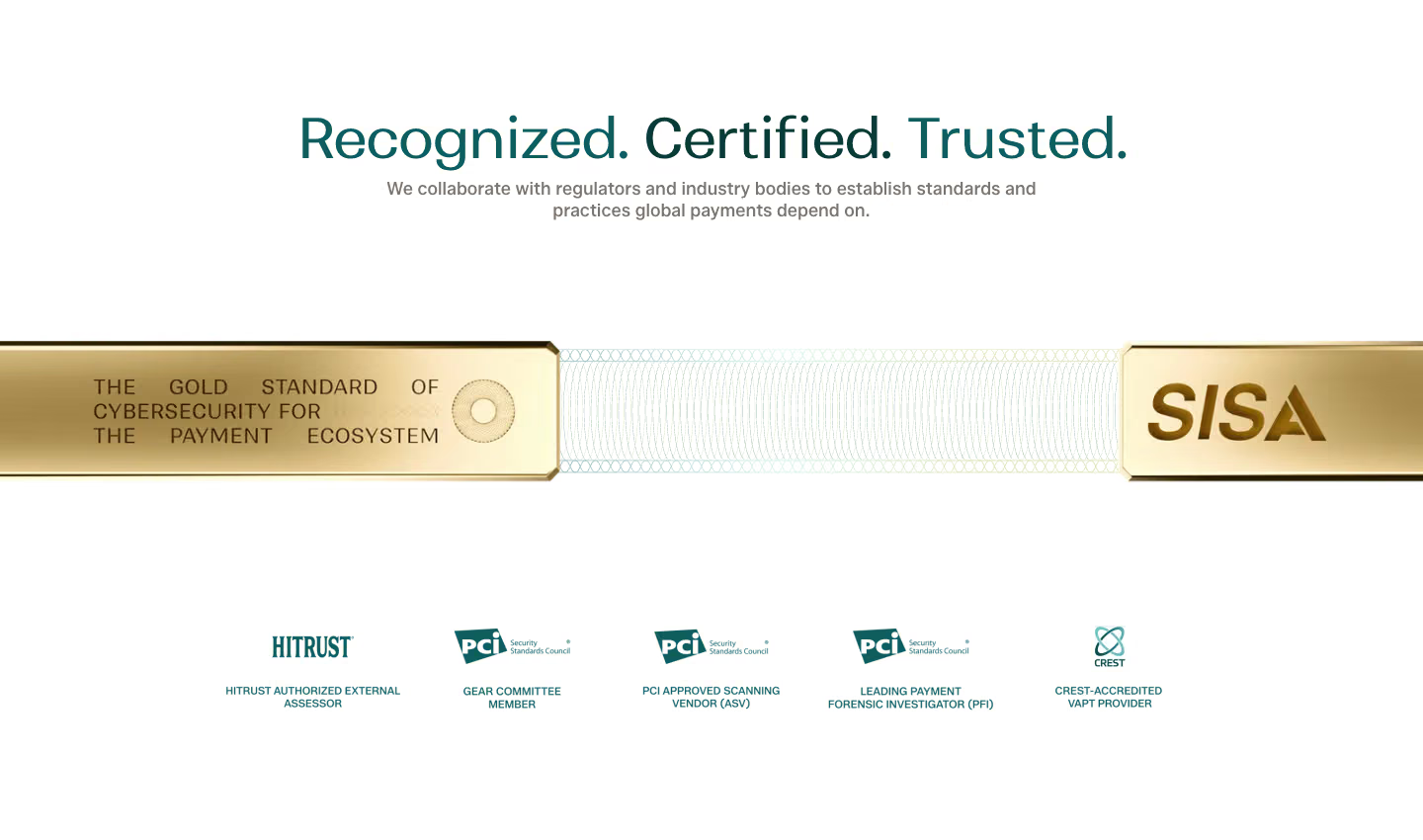
Compliance evidence given that much space reads as a company confident enough to let procurement check its work.
How do you brand a company your buyer is actively trying to replace with fewer tools?
Make consolidation part of the argument. In 2022, Gartner found that 75% of organisations were pursuing security vendor consolidation, up from 29% in 2020.
A brand that only lists what its product adds argues against its buyer's goal. It should also say what the product lets a team retire.
The two product shapes need different proof:
- A platform shows what it replaces, and how the move works.
- A point solution shows what it slots into, and what it leaves alone.
Fortuna Cysec positions itself as enterprise cybersecurity made part of the organisation. Its site sets out platform, services and fit as three cards, so a buyer can place it against the stack they already run.

The hardest part was the mechanism. Navin put it this way: “Showing how the product works in layman's terms is very hard. They created a flow of how data moves through the platform to prevent a breach. When we first saw it, we actually fell off our chairs.”
A board member who can follow the data flow can defend the purchase.
What happens to naming when the category keeps consolidating?
A cybersecurity name has to survive acquisition, bundling and becoming a module, because that is the category's normal life cycle. A name built around one standalone product becomes a liability once it lands in a larger platform's module list. A name that is too generic never differentiates at all.
The naming system needs three layers held apart:
- The company.
- The platform.
- The modules or product lines beneath it.
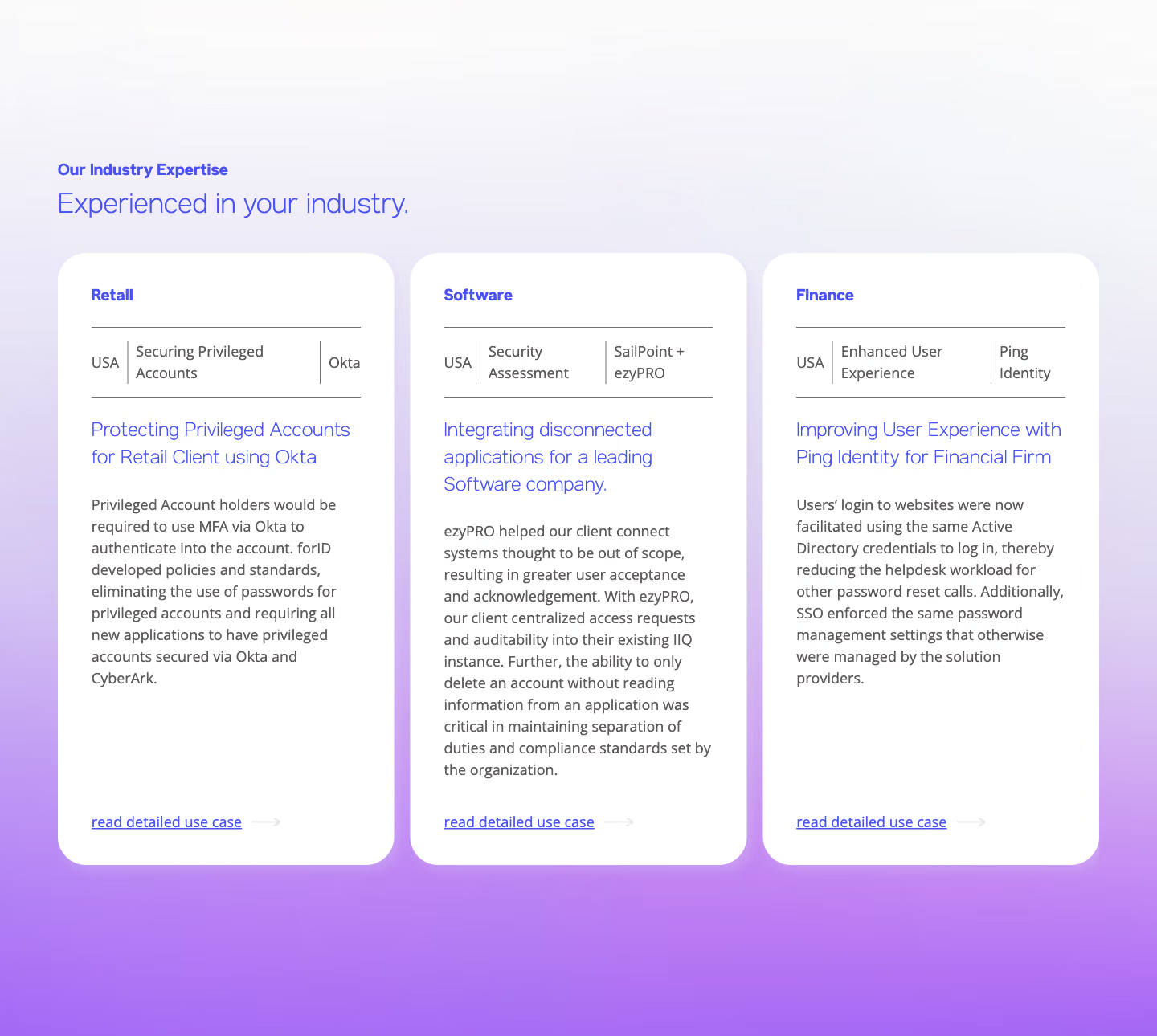
Fortuna Identity shows the third layer at work. Its site presents three industry cases, and each one names the product used.
Lumora Security applied the same discipline for a regional market. Its naming sat alongside a website, a landing page and a film. The site draws the security review as a 72-hour timeline, so the service reads as a sequence a buyer can plan around.

After an acquisition, a product usually keeps its old name longer than makes sense, because renaming disrupts the sales motion built around it. Deciding the hierarchy before a deal keeps that transition cheap.
What does an engagement deliver, and how long does it take?
A cybersecurity brand engagement takes nine to sixteen weeks from kickoff to a finished brand system, at a fixed scope and one price. The price is quoted after a thirty-minute call, and the ranges are on our pricing page.
The work runs in this order:
- Category and positioning: platform, point solution or service.
- Naming, where the hierarchy needs it.
- Narrative and identity.
- Messaging for each audience: analysts, security engineers, CISOs, procurement and the board.
- A brand book that records all of it.
The team is nineteen people, ten of them engineers by degree, across strategy, 3D, delivery and build. We sign an NDA before reviewing unpublished detection logic or architecture.
That is our normal starting point, because the mechanism is what a competitor would most want to see. We explain how that works in branding under NDA.
When is this not a fit?
A landing page for a single point tool, or a fast logo refresh, is not a fit. A freelance designer or a production studio will do that faster and for less, because it needs no category decision and no naming system. If only the site needs rebuilding, our cybersecurity website work is the narrower option.
If your security engineers cannot be in the room, wait. They hold the only efficacy numbers and integration list a technical buyer will trust. Without them, a brand can only repeat the unquantified claims the category already makes.
This suits a company willing to publish real numbers and say what its product does not catch. A company that wants the fear register with better design should look elsewhere.
FAQ
How long does a cybersecurity branding engagement take?
Nine to sixteen weeks for positioning, narrative, identity and a brand book, at a fixed scope and one price agreed after an initial call.
Have you branded a cybersecurity company before?
Yes. SISA on AI-powered cybersecurity for the payment ecosystem, Fortuna Cysec on enterprise security, Fortuna Identity on identity security, and Lumora Security on cybersecurity for businesses in the UAE.
Can we differentiate without fear-based messaging?
Yes, and more easily. Fear has been the category default for two decades, so calm specificity is what stands out to a technical buyer.
Does branding replace a security audit or a penetration test?
No. Branding does not test a product's efficacy. It organises the evidence an audit or a test already produced, so an analyst can find it, check it against their own environment and trust it faster.
When should a cybersecurity company hire someone else?
When the need is a single product page or a quick refresh, or when the security team that holds the efficacy and integration evidence cannot take part in the work.
Written by Mejo Kuriachan. More in the blog, the glossary and the FAQ.